
- Weak aggregate demand persists, even though economic momentum is not alarming.
- Demand weakness reflects real estate, capital markets, and regulatory headwinds.
- Policy easing is reaching critical mass, helping deal with the debt crisis.
- Stepping into China is to see green transition in action.
- Concerns galore, but strategies to deal with a more challenging world are in motion.

Commentary: Isolating Property Sector Risks
An engaging week of travels through Shenzen, Shanghai, and Beijing gave us proximity to China’s imperatives and risks. We found the nation full of dynamism, driven by policy measures aimed at boosting demand and supporting key technologies and sectors. We also picked up a great deal of unease about the future, with concerns about aging, property sector, national security risks, and geoeconomic fragmentation.
With many balls up in the air, the key area of private and public urgency is the property sector, where stagnant or falling prices, massive unsold inventory and incomplete projects, and a mountain of debt continue to sap consumer and business confidence, while taking up the bulk of policy space.
The authorities are balancing the need to prevent an implosion of the property sector, which could unleash a prolonged debt-deflation dynamic, against ensuring the restructuring of the sector goes ahead without causing substantial moral hazard problems. We are sure there will be capital loss, balance sheet consolidation, company liquidation, and years of difficulties in the sector. Looking at the plethora of recent measures, we also have high conviction that China is not at the edge of Japan-like multi-decade stagnation.
Eight takeaways from the trip
Weak aggregate demand persists, even though economic momentum is not alarmingly slow. Substantial rate cuts, liquidity injection, fiscal support for industries, and structural reforms are addressing both the cyclical and long-term issues afflicting the economy. Still, weak export demand, a dearth of foreign investment and international tourists, intense competition and margin compression in certain sectors, and long lag between policy measure and demand response are concerning.
The reasons for weak aggregate demand go beyond the malaise in the property sector. They also reflect chronic weakness in capital market activities, uncertainty about employment, scarring from the harsh Covid pandemic-related lockdown, and hangover from the regulatory crackdown in tech and other sectors.
There is considerable variation among regional economies and sectoral performances, unsurprising given the scale and complexity the economy. Some industries, autos and pharmaceutical, for example, are energised, with continued FDI, innovation, and expansion. Others, not just property, but steel and construction as well, are facing serious headwinds. There is also variation in regional leadership dynamism. Some provinces have provided far more support to the property sector than others.
Some companies and sectors may be facing profit pressure, but it has never been this cheap to finance consumption or investment in China. Perhaps equally powerfully, for debt-burdened households and firms, refinancing debt is also a historically cheap proposition. Aggregate demand may be on a weak footing, but it is getting plenty of support, which is bound to help eventually. Looking at year-to-date performance of the equity and credit markets attest to the fledgling upside.
Stepping into China is to see green transition in action. In Shenzhen and Shanghai, it appeared that most cars on the roads were EVs, offering consumers with highly attractive value propositions. The improvements in air quality and reduction in road noise are apparent to repeat visitors, a testament to not just the ongoing EV revolution, but world-leading investment and innovation in renewable energy production, transmission, and storage. According to the (Centre for Research on Energy and Clean Air), “Clean energy contributed a record CNY11.4tn (USD1.6trln) to China’s economy in 2023, accounting for all of the growth in investment and a larger share of economic growth than any other sector. China’s investment in clean-energy sectors is almost as large as total global investments in fossil fuel supply in 2023 – and similar to the GDP of Switzerland or Turkey.”
With tariffs and non-tariff barriers rising, Chinese manufacturers are pursuing a two-pronged strategy. First, at the low end of the cost spectrum, the view is a degree of competitiveness would be maintained even with tariffs, case in point being entry level EVs. Second, for the mid- and high-end, Chinese firms are moving production to the likes of Mexico and Poland. The second strategy is particularly for members of free trade blocs like USMCA and EU, with the narrative that such investments are creating local jobs and allowing tech transfer in partner countries.
The number of significant support measures for the property market has risen considerably this year. They range from removal of the floor on mortgage rates to reduction in downpayment ratios, from PBOC-underwritten loans to SOEs to buy unsold homes to easing of residency requirement for home purchases. Given the mountain of inventory and lingering concerns about property value, these measures are unlikely to transform China’s beleaguered property market expeditiously. But regional leadership is beginning to take charge instead of just relying on Beijing to dictate all actions. Guangzhou’s move to substantially ease residency requirement to buy multiple homes could act as a powerful demonstration effect for other regions, in our view.
Social welfare, pension, healthcare, and education reforms, essential to transitioning toward consumption-led growth, are on the agenda, but not moving fast enough to create economic ripples or revive sentiments. Local governments need more revenues and decision-making powers, but such shifts are also far from being achieved.
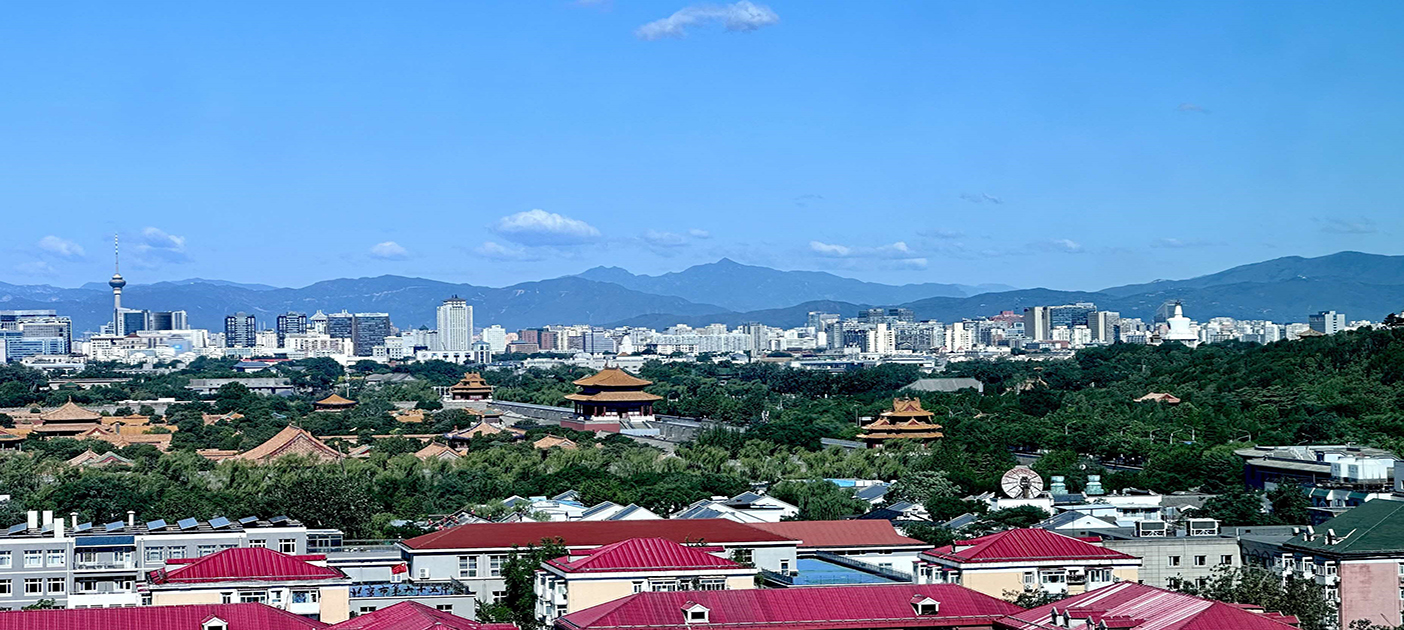
We left China on an early-summer day, with bright blue skies and the sun shining over Beijing. The government has many global and geopolitical imperatives, but looking at the weekend crowds at the city’s parks, we were reminded that its ultimate responsibility is to its citizens, to provide them with the opportunities and security to live a life of prosperity and stability. China’s population have seen transformational changes in the past four decades, but their aspirations are for an even more gainful and meaningful life. There can be no compromise on that.
To read the full report, click here to Download the PDF.


Topic
GENERAL DISCLOSURE/ DISCLAIMER (For Macroeconomics, Currencies, Interest Rates & Digital Assets)
The information herein is published by DBS Bank Ltd and/or DBS Bank (Hong Kong) Limited (each and/or collectively, the “Company”). It is based on information obtained from sources believed to be reliable, but the Company does not make any representation or warranty, express or implied, as to its accuracy, completeness, timeliness or correctness for any particular purpose. Opinions expressed are subject to change without notice. This research is prepared for general circulation. Any recommendation contained herein does not have regard to the specific investment objectives, financial situation and the particular needs of any specific addressee. The information herein is published for the information of addressees only and is not to be taken in substitution for the exercise of judgement by addressees, who should obtain separate legal or financial advice. The Company, or any of its related companies or any individuals connected with the group accepts no liability for any direct, special, indirect, consequential, incidental damages or any other loss or damages of any kind arising from any use of the information herein (including any error, omission or misstatement herein, negligent or otherwise) or further communication thereof, even if the Company or any other person has been advised of the possibility thereof. The information herein is not to be construed as an offer or a solicitation of an offer to buy or sell any securities, futures, options or other financial instruments or to provide any investment advice or services. The Company and its associates, their directors, officers and/or employees may have positions or other interests in, and may effect transactions in securities mentioned herein and may also perform or seek to perform broking, investment banking and other banking or financial services for these companies. The information herein is not directed to, or intended for distribution to or use by, any person or entity that is a citizen or resident of or located in any locality, state, country, or other jurisdiction (including but not limited to citizens or residents of the United States of America) where such distribution, publication, availability or use would be contrary to law or regulation. The information is not an offer to sell or the solicitation of an offer to buy any security in any jurisdiction (including but not limited to the United States of America) where such an offer or solicitation would be contrary to law or regulation.
[#for Distribution in Singapore] This report is distributed in Singapore by DBS Bank Ltd (Company Regn. No. 196800306E) which is Exempt Financial Advisers as defined in the Financial Advisers Act and regulated by the Monetary Authority of Singapore. DBS Bank Ltd may distribute reports produced by its respective foreign entities, affiliates or other foreign research houses pursuant to an arrangement under Regulation 32C of the Financial Advisers Regulations. Where the report is distributed in Singapore to a person who is not an Accredited Investor, Expert Investor or an Institutional Investor, DBS Bank Ltd accepts legal responsibility for the contents of the report to such persons only to the extent required by law. Singapore recipients should contact DBS Bank Ltd at 65-6878-8888 for matters arising from, or in connection with the report.
DBS Bank Ltd., 12 Marina Boulevard, Marina Bay Financial Centre Tower 3, Singapore 018982. Tel: 65-6878-8888. Company Registration No. 196800306E.
DBS Bank Ltd., Hong Kong Branch, a company incorporated in Singapore with limited liability. 18th Floor, The Center, 99 Queen’s Road Central, Central, Hong Kong SAR.
DBS Bank (Hong Kong) Limited, a company incorporated in Hong Kong with limited liability. 11th Floor, The Center, 99 Queen’s Road Central, Central, Hong Kong SAR.
Virtual currencies are highly speculative digital "virtual commodities", and are not currencies. It is not a financial product approved by the Taiwan Financial Supervisory Commission, and the safeguards of the existing investor protection regime does not apply. The prices of virtual currencies may fluctuate greatly, and the investment risk is high. Before engaging in such transactions, the investor should carefully assess the risks, and seek its own independent advice.